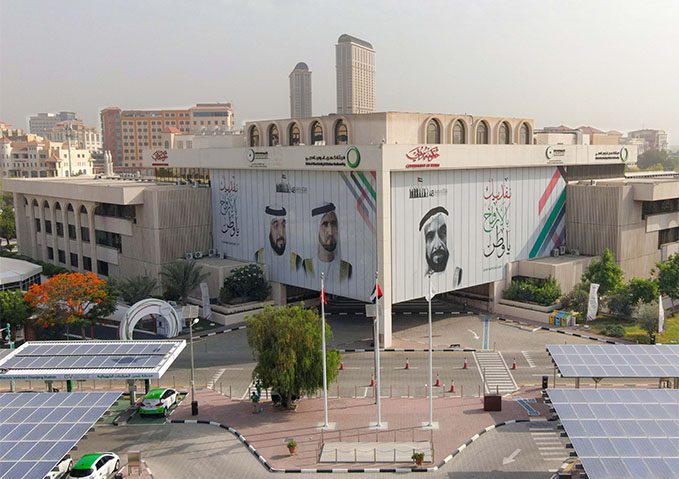
If you rent, buy, sell, manage or develop property in Dubai, DEWA is part of the cost and operating side of real estate that you cannot ignore.
Dubai Electricity and Water Authority, better known as DEWA, is the emirate’s exclusive electricity and water services provider. Its scale is closely tied to Dubai’s population growth, new property supply, commercial activity and infrastructure development.
By the end of 2025, DEWA had 1,327,182 customer accounts, after adding 56,897 accounts during the year. Its installed power generation capacity reached 17,979 MW, while peak electricity demand climbed to 11,391 MW. Daily peak water demand reached 487 million imperial gallons.
That makes DEWA more than a utility provider for anyone involved in Dubai property. Your DEWA account, deposit, consumption and connection status can affect your move into a property, monthly expenses, handover process and final settlement when you leave.
Here is what you actually need to know.
What Is DEWA?
DEWA stands for Dubai Electricity and Water Authority. It supplies electricity and potable water across Dubai and manages major parts of the infrastructure behind these services.
The organization was established in 1992 through the merger of Dubai’s Electricity Department and Dubai’s Water Department.
Today, DEWA serves around four million people living in Dubai, along with an active daytime population of more than five million. DEWA says these figures are expected to rise to 5.8 million residents and 7.8 million daytime population by 2040.
For property owners and tenants, the important point is simple:
DEWA is the account you need to understand for electricity and water supply at your Dubai property.
That includes residential apartments and villas, commercial premises and other eligible properties.
Official DEWA Consumer Services
Why DEWA Matters to Dubai Property Owners
A property’s purchase price or annual rent is only part of its running cost.
Owners and tenants also need to consider:
- Electricity consumption
- Water consumption
- Fuel surcharge
- Meter service charges
- VAT where applicable
- Security deposits
- Connection and disconnection charges
- Cooling costs where district cooling is separately billed
- Property-specific charges that may appear on the overall housing bill
This matters even more for villas, large apartments, offices, retail units and properties with high air-conditioning demand.
DEWA uses a slab tariff, meaning the rate rises as monthly electricity or water consumption moves into higher consumption bands.
So two apartments in the same building can have very different monthly DEWA bills.
The difference is not necessarily the property itself. Occupancy, air-conditioning use, appliances, water consumption and operating habits can all change the final amount.
How Much Does DEWA Cost in Dubai?
There is no single fixed DEWA bill for every property. Your bill depends largely on how much electricity and water you consume, the applicable tariff, fuel surcharge and other charges.
As of October 2026, the published residential and commercial electricity slab rates are:
- 0 to 2,000 kWh: AED 0.230 per kWh
- 2,001 to 4,000 kWh: AED 0.280 per kWh
- 4,001 to 6,000 kWh: AED 0.320 per kWh
- Above 6,000 kWh: AED 0.380 per kWh
The October 2026 electricity fuel surcharge is AED 0.060 per kWh. DEWA also states that 5% VAT applies to these tariffs.
For residential water consumption, the current published slab rates are:
- 0 to 27 m³: AED 7.700 per m³
- 27 to 54 m³: AED 8.800 per m³
- Above 54 m³: AED 10.120 per m³
The October 2026 water fuel surcharge is AED 1.100 per m³.
The important takeaway for property owners is that headline tariff rates do not tell you what your final monthly bill will be. Consumption is the number that matters.
What Is the DEWA Security Deposit?
When activating electricity and water for a residential property, DEWA requires a refundable security deposit.
For standard residential premises, DEWA currently lists:
Apartment: AED 2,000
Villa: AED 4,000
For non-residential premises, the deposit is calculated according to the property’s expected consumption.
This is important when calculating the actual cash needed to move into a Dubai property.
For example, someone renting an apartment does not only need to budget for rent, agency fees and moving expenses. The DEWA deposit is another upfront amount.
The deposit is refundable subject to DEWA’s settlement process when the account is closed. DEWA’s move-out process allows customers to select a refund method, including IBAN, cheque or transfer to another active DEWA account where applicable.

How to Open a DEWA Account When Moving Into a Property
For most tenants, the DEWA move-in process is connected to Ejari, Dubai’s tenancy registration system.
Once an Ejari certificate is issued through the relevant process, DEWA can receive the required property and customer information and send the customer a welcome notification containing the DEWA contract account number, security deposit information and payment link.
Tenants generally need a valid Ejari number.
Property owners follow a different process and may need documents such as the title deed or sale and purchase agreement, depending on the case.
Once the required deposit and activation charges have been paid, DEWA says electricity and water supply can be connected within 15 working hours.
The standard activation charges listed by DEWA include:
- AED 125 for small meters
- AED 300 for large meters
- AED 10 registration fee
- AED 10 knowledge fee
- AED 10 innovation fee
The exact amount depends on the property and meter type.
What Is a DEWA Premise Number?
A DEWA premise number identifies the physical property or premises connected to the DEWA system. It is different from your DEWA contract account number.
This distinction becomes useful when dealing with property managers, landlords, tenants and DEWA services because a property can have a premise number even when the individual customer account changes.
If you are buying or renting property in Dubai, keep the relevant property and DEWA details with your tenancy or ownership documents. It can save time when opening, transferring or closing an account.
What Happens When You Move Out?
Moving out is not simply a matter of switching off the electricity and leaving the keys with the landlord. The DEWA account needs to be settled.
DEWA’s move-out process requires outstanding bills to be paid before the account can be closed. A final meter reading is taken based on the selected move-out date and time, after which the final bill is issued.
DEWA says the final bill is sent within 24 working hours after the requested disconnection date and time.
Your security deposit is then adjusted against the final bill. If the deposit is greater than the final amount, the remaining balance can be refunded using an eligible refund method.
There is also a Move-To service that combines the move-in process for your new property with the move-out process for your existing property.
That can be particularly useful for tenants who are moving between Dubai properties without wanting to manage two separate processes.
Who Pays the DEWA Bill: Tenant or Landlord?
For a rented property, the tenant normally manages the electricity and water consumption account associated with the tenancy. The landlord remains responsible for obligations connected to ownership and the property itself.
The distinction matters because DEWA consumption is not the same thing as every charge associated with living in a Dubai property.
Before signing a lease, tenants should ask the landlord or property manager exactly which costs are included in the rent and which are billed separately.
For investors and landlords, this is equally important when estimating the property’s real operating costs.
A property that looks attractive based only on rent or purchase price may have a very different monthly cost profile once utilities, cooling, maintenance and other charges are considered.
DEWA Bills: What Should You Check?
Do not look only at the total amount. A DEWA bill can contain several components, including electricity and water consumption, fuel surcharge and applicable charges.
DEWA’s tariff structure is designed around consumption slabs, while fuel surcharges can change.
The authority states that the fuel surcharge is calculated based on electricity consumption and water consumption and is included in the monthly bill.
If your bill suddenly increases, compare:
- Electricity consumption
- Water consumption
- Fuel surcharge
- Meter-related charges
- Any additional applicable charges
- Previous month’s consumption
- Seasonal changes in air-conditioning use
This is more useful than assuming every increase is a tariff increase.
Why Dubai’s Summer Matters to Your DEWA Bill
Dubai’s climate makes electricity consumption highly sensitive to cooling demand. Air conditioning can become one of the largest electricity loads in a residential property, particularly during the hottest months.
This is why comparing a winter DEWA bill with a summer bill can give a misleading impression of a property’s normal annual running cost.
For buyers considering a villa or large apartment, asking for previous utility bills can provide useful information before making a decision.
A property with a lower purchase price but unusually high cooling and electricity consumption may not be as inexpensive to operate as it first appears.
For investors, this can also matter when comparing properties with different sizes, orientations, building ages and cooling systems.
How Reliable Is DEWA?
Reliability is one of DEWA’s strongest operational statistics. At the end of 2025, DEWA reported electricity network losses of 2% and water network losses of 4.4%. It also reported 0.82 customer minutes lost per customer per year, which DEWA describes as a world-leading result.
These numbers matter because utility reliability is an infrastructure issue, not simply a customer-service metric.
For a city with more than 1.3 million electricity and water customer accounts, maintaining that level of reliability requires substantial generation, transmission, distribution and water infrastructure.
DEWA says its total infrastructure investment to date exceeds AED 237 billion, with AED 11.8 billion invested in 2025.
That investment is one reason DEWA is important when looking at Dubai’s long-term property story.
DEWA’s Scale Shows How Fast Dubai Is Growing
DEWA’s customer numbers provide an interesting way to understand Dubai’s property and population growth. In 2025, DEWA added approximately 57,000 electricity and water accounts.
By year-end, total customer accounts had passed 1.3 million.
At the same time, annual peak electricity demand increased by 5.83%, reaching 11,391 MW.
Daily peak water demand increased by approximately 7% to 487 million imperial gallons.
These are not just utility statistics.
They reflect the infrastructure demand created by new homes, offices, retail destinations, hotels, industrial activity and population growth.
For Dubai property investors, that makes DEWA data useful background when assessing the scale of development taking place across the emirate.

DEWA and New Dubai Property Developments
DEWA is also directly connected to the development pipeline. In 2025, DEWA received 9,786 electricity connection requests for commercial, residential and industrial projects through its Al Namoos service. That was an 18.74% increase compared with 2024.
The Al Namoos service provides electricity connections of up to 150 kW to DEWA-accredited consultants and contractors through a two-step process.
This matters to developers because electricity connection is part of the practical infrastructure needed to bring new projects online.
For buyers, it reinforces another point: Dubai’s property supply is not growing independently of infrastructure. Utility networks have to expand alongside it.
DEWA and Solar Energy
DEWA is not only expanding conventional utility infrastructure. It is also investing heavily in renewable energy. At the end of 2025, DEWA’s total installed power generation capacity was 17,979 MW, including 3,860 MW of clean energy capacity. The Mohammed bin Rashid Al Maktoum Solar Park is central to this strategy.
DEWA’s current target is for the solar park to reach approximately 8,000 MW by 2030. DEWA expects clean energy to represent around 36% of its total installed generation capacity by then.
For property owners, the more practical question is whether they can generate electricity themselves.
Under Shams Dubai, eligible building owners can install photovoltaic solar systems and connect them to DEWA’s grid.
Electricity generated by the system can be used on-site, while surplus electricity can be exported to the DEWA grid and credited against future consumption according to the applicable system.
DEWA also provides a solar calculator to help customers estimate solar potential and possible savings.
DEWA and Electric Vehicles
DEWA also plays a role in Dubai’s electric vehicle infrastructure. Its published tariff page currently lists EV charging rates of:
- AED 0.64 per kWh for AC charging
- AED 1.14 per kWh for DC charging
- Plus applicable VAT
These rates are separate from the standard residential electricity slabs.
For property buyers, EV charging is becoming another practical consideration.
If you are buying a villa, apartment or commercial property and own an electric vehicle, check what charging infrastructure is available before committing to the property.
DEWA for Commercial Property Owners
DEWA becomes even more important for businesses because electricity and water consumption can be substantially higher than in residential properties. Retail stores, restaurants, offices, warehouses, hotels and industrial premises may have very different consumption profiles.
Commercial and industrial customers also use different tariff bands for electricity. For commercial and industrial water consumption, the current published DEWA rates are:
- 0 to 45 m³: AED 7.700 per m³
- 45 to 91 m³: AED 8.800 per m³
- Above 91 m³: AED 10.120 per m³
The applicable fuel surcharge and VAT should also be considered. For a business owner, this means utility costs should be included in the property’s operating budget rather than treated as an afterthought.
Can Businesses Recover DEWA VAT?
DEWA states that VAT is generally added to the consumption portion of its bill at the UAE’s standard 5% rate. It also notes that registered businesses may be able to recover VAT paid where they meet the relevant Federal Tax Authority requirements.
This is where property expenses and business accounting overlap.
A commercial tenant should not assume that the total DEWA payment is automatically an unrecoverable cost. The treatment depends on the business’s VAT registration and circumstances.
For tax treatment, businesses should rely on the Federal Tax Authority or qualified tax advisers rather than treating a general DEWA explanation as tax advice.
DEWA’s Digital Services
A major change in the way customers deal with DEWA is that most routine services can be handled digitally. Customers can use DEWA’s website and Smart App for services such as:
- Move-in
- Move-out
- Bill payment
- Account management
- Service requests
- Consumption information
- Solar-related services
- Other utility management services
DEWA also integrates certain processes with other Dubai government systems.
For example, the move-in process is integrated with the Ejari process for eligible tenancy cases.
This matters for property owners and tenants because utility management no longer needs to mean visiting a customer service center for every routine transaction.
What Property Buyers Should Ask About DEWA Before Buying
DEWA is not normally the first item people discuss when buying Dubai property. It should still be on the checklist. Before buying, ask:
1. Is the property currently connected?
A completed property should have a clear utility status.
Do not assume the previous occupant’s account automatically becomes yours.
3. What type of cooling does the property use?
District cooling, central cooling and other arrangements can affect the overall utility cost.
4. Can you review historical consumption?
For an owner-occupier, previous bills can provide useful context.
5. Is the property suitable for solar?
For villas and buildings where solar installation is possible, the roof area, orientation, shading and technical requirements matter.
6. Is EV charging available?
This is increasingly relevant for buyers who drive electric vehicles.
7. Who is responsible for outstanding charges?
Make sure responsibilities are clear before completing the transaction.
These questions will not replace a property inspection or legal due diligence. They simply prevent a common mistake: evaluating a property based only on its purchase price.
What Landlords Should Know About DEWA
For landlords, DEWA is mainly a handover and occupancy issue.
- When a tenant moves in, the tenant should establish the appropriate DEWA account.
- When a tenant leaves, the account should be closed and the final bill settled.
DEWA’s current system also connects certain move-out procedures with the cancellation of residential Ejari. DEWA states that, in eligible cases, once the property owner initiates Ejari cancellation, DEWA can notify the tenant to settle the remaining balance and complete the deactivation process.
This reduces the chance of utility accounts being left unresolved after a tenancy ends. For landlords with multiple properties, keeping accurate handover records is still essential.
What Tenants Should Know Before Signing a Dubai Lease
Before moving into a rental property, confirm:
- The Ejari will be registered correctly
- The DEWA account process is clear
- The property has an existing electricity and water connection
- The security deposit required by DEWA is included in your move-in budget
- Any outstanding issues from the previous occupant are resolved
- Cooling charges are understood
- The move-in date matches your tenancy start date
- You know how the DEWA account will be closed when the tenancy ends
This is particularly important when moving into a property that has been vacant.
A tenant should not rely only on verbal assurances from a landlord or agent. Keep the relevant documentation and DEWA communications.
DEWA’s Future Is Bigger Than Electricity and Water
DEWA’s growth reflects the direction of Dubai itself. In 2025, DEWA generated 62.21 TWh of electricity and recorded its highest annual peak power demand of 11.39 GW. Clean power generation reached 10.10 TWh during the year.
Its infrastructure strategy is also changing.
DEWA plans to increase total installed generation capacity beyond 23 GW by 2030, with around 8.3 GW coming from renewable sources. Its desalinated water production capacity is planned to reach 735 million imperial gallons per day, including substantial seawater reverse-osmosis capacity powered by renewable energy.
This gives DEWA an important role in Dubai’s broader development plans.
The more Dubai grows, the more electricity, water and supporting infrastructure the emirate needs.
What DEWA Means for Dubai Real Estate
For property owners and investors, DEWA is useful as more than a monthly bill. Its customer growth, electricity demand, water demand and infrastructure investment provide a view into the underlying growth of Dubai.
Nearly 57,000 new electricity and water accounts were added during 2025, while electricity peak demand rose 5.83%.
At the same time, DEWA invested billions of dirhams into generation, desalination and transmission and distribution networks.
That combination matters.
New homes and businesses create utility demand. Utility investment supports additional development. Development brings more residents, workers and businesses, which creates further demand.
For someone assessing Dubai real estate, DEWA data therefore offers another way to understand the scale of the city’s expansion.
Frequently Asked Questions About DEWA
What does DEWA stand for?
DEWA stands for Dubai Electricity and Water Authority.
Is DEWA mandatory in Dubai?
If your property requires DEWA electricity and water services, you need an active DEWA account or the appropriate service arrangement for the premises.
How much is the DEWA deposit for an apartment?
DEWA currently lists a refundable security deposit of AED 2,000 for a residential apartment.
How much is the DEWA deposit for a villa?
DEWA currently lists a refundable security deposit of AED 4,000 for a residential villa.
How long does DEWA activation take?
DEWA states that electricity and water supply can be connected within 15 working hours after payment of the security deposit for the move-in service.
Can I open DEWA online?
Yes. DEWA provides digital move-in services through its website and Smart App.
What happens to my DEWA deposit when I move out?
The deposit is adjusted against the final bill. If the deposit exceeds the final amount, the remaining balance can be refunded using an eligible refund method.
Does DEWA offer solar services?
Yes. Through Shams Dubai, eligible customers can install solar PV systems and connect them to the DEWA grid under the applicable requirements.
Does DEWA provide EV charging?
Yes. DEWA operates and regulates EV charging infrastructure in Dubai and publishes applicable charging tariffs.
The Bottom Line
DEWA is easy to overlook when buying or renting property in Dubai because it is usually treated as a basic utility service.
But the numbers show why it deserves more attention.
DEWA had more than 1.3 million customer accounts at the end of 2025, generated a record AED 32.84 billion in revenue, operated 17,979 MW of installed generation capacity, and continued investing billions of dirhams into Dubai’s electricity, water and renewable energy infrastructure.
For tenants, the immediate priorities are simple: understand your deposit, consumption, tariff and move-in or move-out process.
For landlords, clean handovers and account management matter.
For businesses, utility consumption should be part of the operating-cost calculation.
For property investors, DEWA’s growth is also a useful indicator of how quickly Dubai’s underlying infrastructure demand is expanding.
The smartest approach is not to ask only “How much is the DEWA bill?”
Ask what is driving the bill, who is responsible for it, how the property uses energy and water, and what the property’s utility profile tells you about its real cost of ownership.