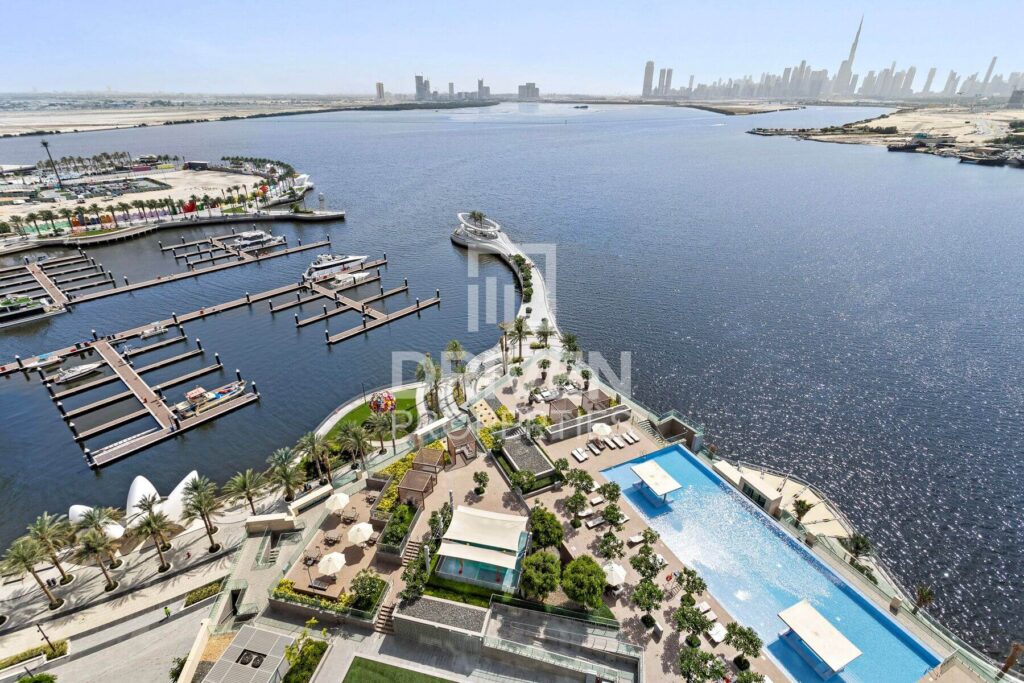
Buying property in Dubai can give you more than an investment asset. Depending on the property value, ownership structure and your eligibility, it can also open a route to UAE residency.
That distinction matters.
A buyer purchasing a Dubai apartment for AED 800,000 is not in the same visa position as someone buying a AED 2 million villa. An investor buying several properties may have a different route again. A buyer using a mortgage also needs to look at how much has actually been paid and what documentation the bank can provide.
Dubai’s property market makes the question increasingly relevant. Dubai Land Department recorded AED 252 billion in real estate transactions during Q1 2026, up 31% year over year, while investment reached AED 173 billion across 57,744 transactions.
So if you are considering property ownership in Dubai, the better question is not simply, “Can I get a visa if I buy property?”
It is:
Which property investment gives me the residency status I actually need?
The Dubai property visa question starts with AED 750,000
For buyers who do not need Golden Residency, Dubai has a property-linked residency route.
Dubai Land Department states that real estate residency is available through two main durations: a three-year residency for property valued at AED 750,000 or more, and a five-year residency for property valued above AED 2 million.
But there is an important point here.
Dubai Land Department’s separate Taskeen service currently states that an individual property owner can apply for an investor residence visa regardless of property value, while a co-owner must have a share worth at least AED 400,000. The service currently issues a two-year investor residence permit and lists a processing time of 7 to 10 business days.
That means buyers should not rely on a simple “buy for AED X, get Y-year visa” formula without checking the route that applies to their ownership and property.
For a real transaction, the title deed, ownership percentage, property status and current DLD eligibility rules matter.
This is one reason the visa should be considered before signing the purchase, not after.
AED 2 million is the important number for Golden Residency
If your objective is long-term residency rather than a standard property investor visa, AED 2 million becomes the key threshold.
The Federal Authority for Identity, Citizenship, Customs and Port Security currently states that real estate investors can qualify for 10-year Golden Residency when they own one or more properties in the UAE with a combined value of at least AED 2 million.
Dubai Land Department’s current Golden Visa service is even more specific. It states that an investor who owns property with a purchase value of at least AED 2 million can apply for a renewable 10-year residence permit. The route can also cover a spouse, children and parents.
This is a very different proposition from buying property simply to obtain a short-term residence permit.
What AED 2 million can mean in practice
Imagine three buyers:
Buyer A: AED 700,000 apartment
The buyer may be looking primarily for rental income, capital appreciation or an affordable entry into Dubai ownership. This purchase does not put the buyer at the AED 2 million Golden Residency threshold.
Buyer B: AED 1.2 million apartment
The investor is above the AED 1 million level referenced in DLD’s residence FAQ but remains below the AED 2 million Golden Residency threshold. The relevant property residency route needs to be checked based on the current DLD rules and the investor’s ownership structure.
Buyer C: AED 2.2 million property
The buyer crosses the AED 2 million threshold for the real estate Golden Residency route, subject to meeting the other requirements and providing the required documentation.
The difference is not simply AED 1.5 million in property value. It can change the residency strategy attached to the investment.
Does the AED 2 million have to be one property?
Not necessarily. The current ICP rules allow the investor to own one or more properties with a total value of at least AED 2 million.
That is important for investors building a portfolio rather than buying one large home.
For example, an investor could potentially structure ownership around:
- Apartment A: AED 1.15 million
- Apartment B: AED 900,000
- Apartment C: AED 250,000
Total property value: AED 2.3 million
The key is not to assume that adding property values on a spreadsheet automatically guarantees approval. The properties need to meet the applicable rules and the ownership needs to be properly documented.
For a Golden Residency application in Dubai, DLD specifically refers to the property being under the applicant’s name and allows more than one property where the AED 2 million requirement is met.
That makes the ownership structure a serious consideration when building a Dubai property portfolio.
What if the property is mortgaged?
This is one of the most important questions for buyers using bank finance. The answer is not simply “mortgages are not allowed.”
The current ICP Golden Residency rules state that real estate may be financed through a loan where the financing comes from an approved local bank.
Dubai Land Department’s Golden Visa service also states that a mortgaged property can qualify, but the investor must provide a bank letter showing the relevant amount paid and the remaining balance, along with the bank’s no-objection documentation where applicable.
This creates an important distinction between:
Property purchase price: AED 2.5 million
and
Amount already paid: AED 1.6 million
Those numbers are not automatically treated as the same for visa purposes.
If your residency plan depends on crossing the AED 2 million threshold, financing should be discussed with the bank and property advisor before purchase.
Do not assume that a AED 2 million purchase price alone settles the visa question.
Off-plan property can also matter
Dubai’s off-plan market attracts investors who want lower entry costs, payment plans and exposure to new developments.
For Golden Residency, the current ICP guidance states that investors can qualify through one or more off-plan units with a total value of at least AED 2 million, provided the purchase is made from an approved local real estate company authorized by the relevant authority.
That creates an interesting strategy for investors who do not want to put AED 2 million into a completed property immediately.
For example, an investor purchasing two qualifying off-plan units with a combined value above AED 2 million may potentially structure the investment around the Golden Residency threshold.
But there is a practical difference between being contractually committed to an off-plan purchase and having a completed property with a registered title deed.
This is where documentation and the exact status of the development become important.
Before signing an off-plan SPA, a buyer should ask:
- Is the developer approved and properly registered?
- Is the project registered with the Dubai Land Department?
- Does the specific purchase structure qualify for the intended residency route?
- What evidence of ownership or investment will be available for the application?
- Does the payment schedule affect eligibility?
- What happens if the property is still under construction when the visa application is made?
A good property investment decision answers these questions before the deposit is paid.
The title deed is more important than the brochure
Property marketing focuses on views, amenities, payment plans and expected returns. Visa applications focus on evidence.
For the Golden Visa route, DLD lists documents including the passport, e-Certificate of Title or title deed, photograph, UAE ID if available, and current residence permit if applicable.
For standard investor residency through Taskeen, DLD also requires the electronic title deed, photograph and other supporting documents.
This is why buyers should keep their transaction documentation organized from the beginning.
At minimum, keep copies of:
- Title deed or applicable ownership document
- Sale and purchase agreement
- Bank financing documents
- Bank payment evidence
- Developer documentation for off-plan purchases
- Passport
- Existing UAE visa, if applicable
- Emirates ID, if applicable
- Marriage and birth certificates if family sponsorship is planned
A property can be an excellent investment and still create a frustrating visa application if the paperwork does not clearly establish ownership and eligibility.
How much does the Dubai Golden Visa cost?
The property price is only part of the calculation. Dubai Land Department currently lists AED 9,884.75 for the investor’s 10-year Golden Residency application, including the listed medical examination, Emirates ID, residency confirmation, DLD and administrative fees.
For a 10-year family residence permit, DLD lists AED 5,774.50 per sponsored family member, with a sponsorship file opening fee of AED 318.75. The listed parents’ 10-year residence permit fee is also AED 5,774.50.
These figures should be treated as government service charges listed by DLD, not as the total cost of owning the property.
A serious buyer should also budget for:
- Dubai Land Department property registration costs
- Real estate agency fees where applicable
- Mortgage-related costs
- Bank valuation fees
- Developer administration charges
- Insurance
- Emirates ID and medical requirements
- Family sponsorship costs
- Property service charges
- Maintenance and management costs
The visa is therefore one component of the ownership budget, not the reason to ignore the rest of the transaction.
Can Golden Residency holders sponsor their family?
Yes. The current ICP Golden Residency guidance states that eligible investors can obtain residence permits for spouses and children, regardless of age, as well as parents, subject to the applicable requirements.
Dubai Land Department’s Golden Visa service also confirms sponsorship eligibility for the husband or wife, children and parents.
For families considering a permanent base in Dubai, this can change the economics of the purchase.
The value is not only in the investor’s residency. A qualifying property investment can become part of a broader family relocation strategy involving schooling, business activity, healthcare and long-term residence.
That is a much stronger reason to consider the Golden Residency than simply wanting a visa sticker in a passport.
What happens if you sell the property?
This is where investors need to be careful. A property-linked residency is connected to the qualifying investment and the applicable immigration rules. Selling the property can therefore affect the basis on which the residency was granted.
The current ICP guidance makes clear that real estate investors must own qualifying property and that the investment must satisfy the relevant conditions.
So if you are buying a property primarily for residency, do not make the decision based only on the initial application.
Ask what happens to your residency if you:
- Sell the property
- Transfer ownership
- Split ownership with another person
- Refinance the property
- Move the property into another ownership structure
- Buy another property and sell the original one
The right investment strategy considers the entire holding period, not the day the visa is approved.

Dubai property ownership is becoming a longer-term decision
The wider market numbers help explain why residency and property ownership are increasingly discussed together. Dubai recorded 226,000 real estate transactions worth AED 761 billion in 2024, with transaction volume rising 36% and value rising 20% year over year.
Then in 2025, the market recorded 147,500 sold units worth AED 280 billion, while the value of completed projects reached AED 27.5 billion. DLD also reported 1.38 million registered tenancy contracts worth AED 126.4 billion.
By Q1 2026, total real estate transactions had reached AED 252 billion, with investment alone accounting for AED 173 billion across 57,744 transactions.
These numbers do not mean every property is a good investment. They do show why Dubai continues to attract people who are thinking beyond a holiday home. For some buyers, the property is an investment, while for others, it is a home.
For business owners and internationally mobile families, it can be both an asset and part of a wider residency strategy.
The mistake is buying for the visa and choosing the property second
A residency benefit should strengthen a property purchase. It should not rescue a bad one.
Suppose two apartments both qualify for a residency route.
One is in a mature location with established rental demand, strong transport access, completed infrastructure and a proven resale market.
The other is cheaper per square foot but depends heavily on future infrastructure and has a large pipeline of competing units.
If both offer a similar visa outcome, the residency benefit does not make them equally good investments.
The property still has to work on its own merits.
Look at:
Location
How close is the property to major employment centers, schools, transport and daily services?
Rental demand
Who is the likely tenant, and what comparable units are actually renting for?
Service charges
A high gross rental yield can look much less attractive after annual service charges, maintenance and management costs.
Supply
How many similar units are already available, and how many more are scheduled to enter the market?
Exit liquidity
If you need to sell in three or five years, who is likely to buy the property?
Developer
For off-plan purchases, the developer’s delivery record and project registration matter.
Residency eligibility
Finally, confirm that the property and ownership structure support the residency route you actually want.
This order matters.
A practical Dubai property visa checklist
Before paying a deposit, a prospective buyer should be able to answer these questions clearly:
1. What residency am I targeting?
Standard property-linked residency and Golden Residency are not the same thing.
2. What is the property’s qualifying value?
Do not confuse purchase price, market value, valuation and amount paid.
3. Will I own the property personally?
Joint ownership can change eligibility.
4. Is the property mortgaged?
If yes, confirm the amount paid and the bank documentation required.
5. Is it completed or off-plan?
The evidence required can differ depending on the investment structure.
6. Can I sponsor my family?
If this is important, check the exact requirements before purchasing.
7. What will the visa cost beyond the property price?
Include government fees, medical, Emirates ID and family sponsorship costs.
8. What happens if I sell?
Understand how a future sale could affect the residency status.
9. Is the property a good investment without the visa?
If the answer is no, reconsider the purchase.
The bottom line for aspiring Dubai property owners
Dubai’s property visa system gives investors several routes, but there is no single “buy property, get visa” rule.
A property around the AED 750,000 level can put an investor into a different residency conversation from a AED 2 million-plus investment. A portfolio can be treated differently from a single property. Mortgage financing can affect the evidence required. Off-plan property can qualify under specific Golden Residency rules. And family sponsorship creates another layer of planning.
For investors targeting long-term residency, AED 2 million is the critical figure to investigate, with the current ICP and DLD guidance supporting a 10-year Golden Residency route for qualifying real estate investors.
For buyers considering lower-value property, Dubai’s standard property-linked residence options may be more relevant.
The smartest approach is to choose the property first on investment fundamentals, then structure the purchase so the residency benefit works alongside the investment.
Dubai’s property market is large enough that you do not need to choose between an investment and a residency strategy.
You need to make sure the two decisions actually fit together.
Before committing to a property, verify the current eligibility, ownership and documentation requirements directly with the Dubai Land Department or the relevant UAE immigration authority.