Dubai’s property market has moved beyond the question of whether demand exists. The more important question for investors in 2026 is where that demand is translating into durable property value.
The market is operating at a scale that few global real estate destinations can match. Dubai recorded AED 761 billion in real estate transactions across 226,000 transactions in 2024, with transaction volume rising 36% and value increasing 20% year over year, according to the Dubai Land Department’s 2024 market report.
The momentum continued into 2025. Dubai Land Department reports that the cumulative value of real estate transactions reached approximately AED 917 billion, while more than 100,000 new investors registered with the department for the first time. Off-plan sales alone accounted for 132,500 transactions during the year.
Then came another strong start to 2026.
During Q1 2026, Dubai recorded AED 252 billion in real estate transactions, representing a 31% increase in transaction value compared with Q1 2025. Real estate investments reached AED 173 billion, while foreign investment reached AED 148.35 billion, up 26% year over year. Luxury real estate investments reached AED 87.71 billion, also increasing 26%.
These figures demonstrate the depth of the market. They do not mean every property represents the same opportunity.
For investors, the real story in 2026 is becoming more specific: location quality, rental demand, supply, developer credibility, property differentiation and exit potential increasingly matter alongside headline market growth.
Dubai’s Property Market Has Become a Scale Story
One of the strongest arguments for Dubai real estate is the size of the underlying economy supporting it. Dubai’s population reached 4.471 million in Q3 2025, according to the Dubai Statistics Center. The number of people active in Dubai during peak hours reached 6.217 million during the same quarter.
For property investors, the second figure is particularly useful.
A city’s property demand is not generated only by permanent residents. Employees commuting into business districts, entrepreneurs establishing companies, international professionals relocating to Dubai and visitors staying for extended periods all contribute to demand for residential and commercial space.
That creates several property demand pools rather than one.
An apartment in a business-oriented district may appeal to professionals. A villa in a family-focused community may depend more heavily on schools, road connectivity and neighborhood amenities. A branded residence may target international buyers seeking a particular lifestyle or level of service.
The investment question therefore becomes less about whether Dubai has demand and more about which type of demand supports the property being considered.
Rental Demand Gives Investors Another View of the Market
Property prices receive most of the attention, but Dubai’s rental market provides an important indication of how much occupier demand exists beneath the investment market.
In 2025, Dubai registered 1.38 million tenancy contracts worth AED 126.4 billion. The number of registered contracts increased 6% from 2024, while their total value increased 17%. New tenancy contracts exceeded 513,000, increasing 10%, while renewed contracts exceeded 514,000. These figures come directly from the Dubai Land Department’s 2025 rental market report.
That distinction is important for landlords.
A property does not generate rental income because the Dubai market is growing in general. It generates rental income because people are willing to live or operate a business in that particular property and location.
This makes tenant demand one of the most practical tests an investor can apply. Before buying, it is worth asking:
- Who is the likely tenant?
- What competing properties are available nearby?
- What rent are comparable properties actually achieving?
- How quickly do similar units typically lease?
- Are new developments likely to compete for the same tenants?
- What building or community features justify the rental price?
These questions can reveal more about an investment than a generic claim about Dubai property appreciation.

Luxury Property Is About Scarcity, Not Simply Price
Dubai’s luxury segment has become one of the most visible parts of the market. DLD recorded AED 87.71 billion in luxury real estate investments in Q1 2026, up 26% from the same period a year earlier.
For investors exploring luxury properties in Dubai, a high purchase price does not automatically make a property a scarce asset. True property differentiation can come from factors such as:
- Waterfront positioning
- Uninterrupted views
- Large floor plans
- Limited unit numbers
- Private amenities
- Branded hospitality services
- Architectural distinction
- Established communities
- High-quality building management
- Proximity to major lifestyle destinations
Consider two apartments priced within the same range.
One may sit in a large development with hundreds of similar units and several competing projects nearby. The other may have a limited supply of comparable residences, a protected view and stronger access to established amenities.
Both may be described as luxury properties. Their investment characteristics can be very different. This is why investors should distinguish between expensive property and scarce property.
Foreign Investors Continue to Shape Dubai Real Estate
International capital is another defining feature of Dubai’s property market. Foreign real estate investment reached AED 148.35 billion in Q1 2026, increasing 26% year over year. The number of foreign investments increased 11% to 48,445. DLD also recorded 29,312 new investors, up 14% from Q1 2025.
This international investor base creates several layers of demand.
Some buyers are looking for rental income. Others want a second home, business relocation base, long-term capital allocation or access to Dubai’s wider economy.
Residency can also be part of the decision. Under the UAE’s Golden Visa framework, real estate investors can qualify for a long-term residence visa when they meet the applicable requirements, including the AED 2 million property investment threshold specified by the UAE government.
Investors can review the current requirements directly through the UAE government’s Golden Visa guidance.
The important point is that residency should be treated as one component of an investment decision, not as a substitute for checking the property’s financial fundamentals.
Supply Could Become the More Important Question
Strong demand does not remove the importance of supply. In 2025, the number of Dubai projects under construction increased 25% to 937 projects, according to DLD. The same report recorded 124 completed projects, worth AED 27.5 billion. The number of sold units increased 25% to approximately 147,500 units, with their total value rising 30% to AED 280 billion.
For investors, this creates a question that is often overlooked during the buying process:
What will the competitive landscape look like when you want to sell?
A property may have strong demand today. But if several comparable towers are scheduled for completion nearby over the next three years, tenants and future buyers will have more options.
That can affect:
- Rental pricing
- Vacancy periods
- Resale demand
- Negotiating power
- Investor yield
- Exit timing
This is especially relevant when evaluating off-plan property. The investment case should not stop at the developer’s current sales price. It should examine the amount and type of competing supply expected to enter the same submarket before and around handover.
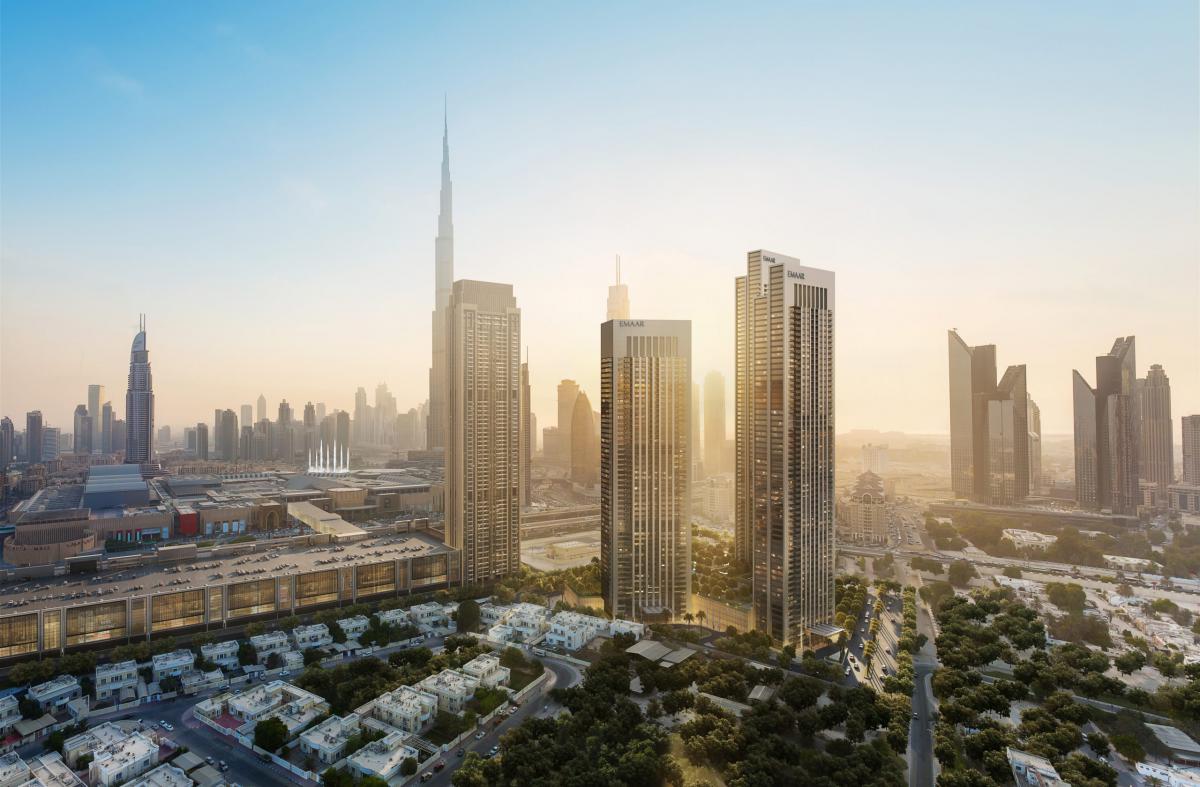
Off-Plan Property Needs a Different Investment Calculation
Dubai’s off-plan market remains a major part of the sector. DLD recorded 132,500 off-plan project sales transactions in 2025, according to its market information. Off-plan purchases can offer access to new developments and staged payment structures, but investors need to look beyond the launch presentation.
Developer track record
Look at completed projects rather than relying solely on the current project’s marketing material. Check delivery history, building quality, community management and the performance of comparable developments.
Payment schedule
A 20% or 30% initial payment can make a project appear accessible, but the total investment requirement remains the key figure. Map every scheduled payment against your expected cash flow.
Handover timing
An off-plan property does not generate rental income before it becomes available for occupation. A delayed completion can therefore change the expected investment timeline.
Future competition
Look at what is being developed around the project. A property may face very different competition at handover than it does at launch.
Exit strategy
Before buying, identify the likely future buyer. Will the eventual purchaser be an end user, landlord, international investor or another off-plan buyer?
That question forces the investment case to move beyond the initial sales pitch.
Ready Properties Give Investors Something Off-Plan Cannot
Ready properties have a different advantage: the asset can be examined in its actual condition. An investor can inspect the building, surrounding streets, parking, views, facilities, maintenance standards and tenant profile before committing capital.
Rental income can also be assessed against an existing market rather than a projection. This is particularly useful when comparing properties in the same area or evaluating alternatives such as plots for sale in Dubai, where investors need to consider development costs, permitted land use, and the time required to generate a return.
The Dubai Land Department’s Real Estate Data platform allows users to search transaction, rental, project, valuation, land, building, unit, broker and developer information. Its transaction data includes fields such as transaction amount, property size, rooms, parking, nearest metro, nearest mall and nearest landmark.
That gives investors a practical research tool.
Instead of asking an agent only, “What is this property worth?”, an investor can investigate comparable market evidence.
Location Means More Than a Famous Community Name
A well-known Dubai community does not automatically make every property inside it a strong investment. Investors should examine the micro-location.
A property close to a Metro station may attract a different tenant pool from one that requires a car for every journey. A villa close to established schools may appeal more strongly to families than a similar villa in an area where educational infrastructure is still developing.
The same applies to:
- Road access
- Hospitals
- Schools
- Retail
- Restaurants
- Beaches
- Business districts
- Public transport
- Parks
- Entertainment
- Planned infrastructure
The question is not simply whether a location is popular.
It is why people want to live there and whether that reason is likely to remain relevant during the investment period.

Dubai’s Data Infrastructure Makes Due Diligence Easier
One of the less visible developments in Dubai’s property market is the growing availability of official market data. The DLD Real Estate Data platform provides access to multiple categories of market information, including sales, rents, projects, valuations, buildings, units, brokers and developers.
That matters because investors no longer need to depend entirely on marketing material when researching a property.
A buyer can investigate transaction values, rental contracts, property sizes and nearby market activity before making an offer. For business owners and experienced investors, this changes the conversation.
The question becomes less:
“Does this agent think the property will perform?”
And more:
“What does the available market evidence actually show?”
What Investors Should Check Before Buying in 2026
A serious Dubai property assessment should include the following.
Calculate the complete acquisition cost
Do not evaluate the purchase price alone. Include registration charges, agency fees, financing costs where applicable, furnishing, service charges and expected maintenance.
Check actual rental evidence
Compare the expected rent with comparable properties and official rental information. Dubai’s Rental Index is one useful reference point for understanding rental values and applicable increases.
Review upcoming supply
Identify developments scheduled for completion during your intended holding period. A property’s future competition matters as much as its current competition.
Examine the developer
For off-plan purchases, investigate completed projects, delivery history, construction quality and post-handover management.
Understand service charges
Two properties with similar purchase prices and rents can produce different net returns once annual service charges are included.
Define your exit market
Ask who is likely to buy the property from you later. An investment needs an exit strategy, even if you intend to hold it for the long term.
Separate lifestyle value from investment value
A buyer may willingly pay more for a waterfront view, larger terrace or branded residence because they personally value those features. That premium does not automatically translate into a proportionally higher rental return.
The purpose of the purchase matters.
What Property Prestige Means in Dubai in 2026
Dubai’s property market is large, international and still expanding. The first quarter of 2026 alone generated AED 252 billion in real estate transactions, while foreign investment reached AED 148.35 billion and luxury investment reached AED 87.71 billion.
At the same time, Dubai’s rental market recorded 1.38 million tenancy contracts worth AED 126.4 billion during 2025, while the number of projects under construction reached 937.
These numbers point to a market with substantial activity on both sides of the equation: demand and supply. That makes 2026 less about simply finding a property in Dubai and more about identifying an asset with defensible fundamentals.
The strongest investment case may not always be the most expensive property, the newest launch or the development with the biggest marketing campaign.
It is the property where the numbers and the fundamentals make sense together.
- Who will want this property in five years?
- What protects its rental demand?
- How much competing supply is coming?
- What makes this property different from the alternatives?
- Does the investment still work if market growth slows?
Those questions provide a more useful framework for evaluating Dubai real estate in 2026 than simply following the market’s headline transaction numbers.
Property prestige, in this context, is not about owning the most expensive address. It is about owning an asset with a clear reason to remain desirable.