When people discuss Dubai real estate, the conversation usually starts with property prices, rental yields, new launches or investment returns. The companies behind those properties often receive less attention.
Yet property developers determine much of what enters Dubai’s real estate market in the first place. They acquire and develop land, design communities, arrange construction, launch properties, manage delivery and, in many cases, continue managing assets after handover.
The scale of this activity is significant. Dubai’s real estate sector recorded more than AED 917 billion in transactions across over 270,000 transactions in 2025, according to the Dubai Government. Real estate investments alone exceeded AED 680 billion across 258,600 deals, with around 193,100 investors participating in the market.
Off-plan property was also a major part of the market. According to the brokerage FY2025 report, Dubai recorded about 132,000 off-plan residential sales in 2025, roughly two-thirds of all residential transactions.
These figures explain why understanding the role of a developer matters. For an off-plan buyer, the developer is not simply the company selling an apartment. The developer is responsible for turning a plan into a physical asset.
What Does a Property Developer Do in Dubai?
A property developer can control almost every major stage between land acquisition and property handover.
The process generally includes:
- Identifying and acquiring development land
- Studying demand and deciding what type of property to build
- Creating the master plan
- Appointing architects, engineers and consultants
- Arranging project financing
- Selecting contractors
- Managing construction
- Launching and selling units
- Delivering the completed development
- Managing or supporting the community after handover
The difference between a developer and a property broker is therefore important. A broker helps market and transact property, while a developer creates the property. For buyers working with Aqar Dubai, understanding this distinction can make it easier to assess who is responsible for the project’s development and delivery.
That distinction becomes especially relevant in Dubai’s off-plan market, where buyers commit capital before the completed property is available for inspection.
Dubai’s Property Developers Are Operating at a Different Scale
Dubai has several major developers with development pipelines worth billions of dirhams. Emaar Properties reported its highest-ever property sales of AED 80.4 billion in 2025, up 16% from AED 69.5 billion in 2024. Its revenue backlog reached AED 155 billion at the end of 2025. Emaar also reported a land bank of approximately 618 million square feet, including around 344 million square feet in the UAE.
Those numbers show why the role of a major developer extends well beyond individual buildings. A company with hundreds of millions of square feet of development opportunities can influence the supply, design and character of multiple communities over many years.
Sobha Realty provides another example. The company reported AED 30 billion in sales for FY2025, representing 30% year-over-year growth, including around AED 8 billion from its projects in Umm Al Quwain. Its 2025 investor information also reported more than 15,000 units launched across new and existing projects in Dubai and Umm Al Quwain and approximately 3,000 units completed ahead of schedule during the year (around 2,000 completed and delivered, and around 1,000 completed and awaiting building completion certificates).
These figures are useful for understanding the development sector, but they should not be interpreted as proof that every project from a particular developer will deliver the same result. That distinction matters when making an individual property decision.
Emaar: From Individual Buildings to Master-Planned Communities
Emaar is one of the clearest examples of how a developer can influence an entire area rather than simply construct individual towers.
Its portfolio includes major Dubai communities and destinations such as Downtown Dubai, Dubai Creek Harbour, Dubai Hills Estate (a joint development with Meraas) and Emaar South.
The scale of Emaar’s current development pipeline is reflected in its 2025 figures. Its UAE land bank was approximately 344 million square feet, forming part of a total land bank of around 618 million square feet.
For buyers, the significance is not simply the size of the land bank.
It means that when assessing an Emaar property, the existing apartment or villa is only one part of the picture. The future development of the wider community can also affect the property’s surroundings, amenities, accessibility and competition.
This is why a buyer researching an Emaar project in Dubai Hills Estate, for example, should examine the wider community plan rather than looking only at the unit’s floor area and asking price.
Sobha Realty: The Developer’s Construction Model Matters
Sobha Realty offers a different example because its business model places considerable emphasis on construction and development control.
The company reported that it launched more than 15,000 units during FY2025 and completed approximately 3,000 units ahead of schedule. Its FY2025 investor presentation also reported a revenue backlog of around AED 29 billion.
Sobha’s portfolio includes developments such as Sobha Hartland II, Sobha One, Sobha Central and Sobha Sanctuary.
For buyers, the useful lesson is not that a developer with a large sales figure is automatically preferable.
It is that construction capacity and delivery history deserve to be examined alongside the sales brochure.
An off-plan buyer should ask what has actually been delivered, how previous projects progressed and how the specific development is moving through construction.
Dubai Holding and Meraas: Why the Master Developer Matters
Another important name in Dubai is Dubai Holding, particularly through its real estate platform and brands such as Meraas.
Dubai Holding Real Estate describes itself as one of Dubai’s leading integrated master developers and asset managers. Its published figures show more than 106,700 residential and land plots delivered and approximately 1.6 million people living in its communities.
This illustrates a different aspect of development value.
A master developer can influence much more than the construction of individual homes. It can shape districts, infrastructure, public spaces, retail destinations and the overall identity of a community.
Dubai Holding’s portfolio includes major destinations and communities associated with brands such as Meraas, while its partnerships also bring third-party developers into large master developments.
For example, in July 2025, Dubai Holding announced an agreement with Select Group and Emirates Strategic Investments Company for projects at Palm Jebel Ali and Dubai Design District (WAM).
This shows how Dubai’s development ecosystem can involve several layers:
Master developer → development partner → project developer → contractor → sales channel
Understanding that structure can help buyers identify who is actually responsible for each part of a project.
Aldar’s Entry Into Dubai Shows How Developers Expand the Market
Aldar is another useful example because it has historically been strongly associated with Abu Dhabi but has expanded its Dubai presence through partnerships.
In 2025, Aldar reported that its Dubai development The Wilds, its third development in Dubai in partnership with Dubai Holding, sold 734 villas for AED 5 billion in its first phase. Expatriate residents and overseas buyers represented 92% of sales.
The example is important because it shows how demand can extend beyond the traditional buyer base.
It also demonstrates the scale of individual launches. AED 5 billion in sales from 734 villas represents an average transaction value of roughly AED 6.8 million per villa based on the reported figures.
Aldar’s wider 2025 performance was also substantial. Group sales reached AED 40.6 billion, up 21% year over year, while UAE sales reached AED 35.5 billion, up 25%. Its development revenue backlog reached AED 71.7 billion, including AED 61 billion in the UAE.
Again, company-wide sales should not be treated as a substitute for project-level due diligence. They simply demonstrate the financial scale behind major developers operating in the UAE.
Developers Influence What Dubai’s New Housing Supply Looks Like
The most direct value a developer brings to the market is new supply.
Every new community, apartment tower, villa development or mixed-use project adds properties to Dubai’s available stock.
But the important question is not simply how many homes are being built.
It is what type of homes are being built and where they are being added.
For example, a developer launching hundreds of luxury villas in a family-oriented community is addressing a different segment from a developer launching compact apartments near a major business district.
This affects:
- Target buyers
- Expected tenant profile
- Unit sizes
- Amenities
- Payment structures
- Parking requirements
- Community facilities
- Future competition
This is one reason buyers should examine the supply pipeline around a project.
A property can look attractive today, but the market around it may change significantly as additional developments are delivered.
Why the Developer Matters More for an Off-Plan Purchase
With a completed property, the buyer can inspect the actual building.
You can see:
- The finished apartment
- The quality of common areas
- The building’s surroundings
- Parking
- Access roads
- Existing amenities
- The actual view
- The condition of the property
Off-plan buyers do not have the same level of visibility.
They are evaluating a future asset using plans, specifications, contracts, construction progress and the developer’s ability to deliver.
This makes the developer part of the investment assessment.
Dubai’s regulatory system provides specific mechanisms for off-plan projects. Dubai Land Department’s real estate data includes project-level information such as the developer name, project value, escrow account number, project status, percentage completed, completion date, total buildings and total units.
That information is particularly useful because it allows buyers to move beyond marketing material.
Escrow Accounts Give Buyers Another Important Check
The financial structure of an off-plan project deserves attention.
Dubai’s regulatory framework requires project-level arrangements for off-plan developments, including escrow accounts.
DLD’s project data specifically identifies an escrow account number alongside the developer, project value, project status and construction completion percentage.
For a buyer, this means there is a practical reason to verify the project through official channels before transferring money.
The question should not simply be:
“Is this developer famous?”
It should be:
“Is this specific project registered, and what does the official project information show?”
That is a much stronger due diligence process.
Developer Reputation Should Be Tested Against Delivery
Brand recognition can be useful, but it is not enough.
A developer’s previous projects can tell buyers more about execution than an advertising campaign can.
For example, Sobha Realty reported approximately 3,000 units completed ahead of schedule during FY2025.
That is a measurable delivery claim.
Emaar reported a AED 155 billion property revenue backlog at the end of 2025, which indicates the scale of contracted future development revenue.
Dubai Holding Real Estate reports more than 106,700 residential and land plots delivered across its portfolio.
These figures are more useful than vague statements about being “trusted” or “leading.”
For buyers, the same principle should apply when evaluating any developer:
Look for evidence.
Company Performance and Project Performance Are Not the Same
This is one of the most important distinctions buyers should understand.
A developer can report billions of dirhams in sales while an individual project still requires careful analysis.
Consider the difference between:
Developer-level information
- Annual sales
- Revenue
- Backlog
- Land bank
- Number of projects
- Number of units delivered
and:
Project-level information
- Location
- Launch price
- Current price
- Construction percentage
- Completion date
- Unit size
- Payment plan
- Service charges
- Escrow arrangements
- Nearby competing supply
- Expected rental market
The first group tells you about the company.
The second tells you about the property you are actually considering.
That is why a buyer should never use a developer’s headline sales figure as the only reason to purchase a unit.
What Should Buyers Check Before Buying From a Developer?
A practical review should focus on the specific project.
1. Check the developer’s completed projects
Look at actual buildings and communities rather than relying only on renders.
2. Check the project with Dubai Land Department
DLD’s real estate database provides project information including developer, project status, completion percentage and completion date.
3. Check construction progress
An off-plan property’s value proposition changes as construction progresses.
A project at the planning stage carries different considerations from one approaching handover.
4. Examine the payment plan
A low initial payment does not necessarily mean a low total financial commitment.
Calculate every installment and identify when the largest payments become due.
5. Study the surrounding development
Check what is already built and what is planned around the project.
6. Look at competing supply
If several developers are launching similar apartments in the same location, buyers should understand how those projects compare in size, specifications, amenities and pricing.
7. Calculate ownership costs
The purchase price is only one part of the financial calculation.
Buyers should also consider service charges, financing costs, registration expenses, maintenance, furnishing and property management where applicable.
Why Master Planning Can Matter More Than the Building
A developer’s influence becomes particularly visible in master-planned communities.
Consider Dubai Hills Estate.
The value proposition is not based solely on individual residential buildings. The wider community includes residential developments, green spaces, retail, leisure facilities and other infrastructure.
The same principle applies to communities such as Dubai Creek Harbour and Emaar South.
When buying within a master-planned development, the buyer is effectively purchasing into a wider ecosystem.
That means the developer’s plans for the surrounding area matter.
A buyer should therefore investigate:
- Future phases
- Planned amenities
- Retail
- Roads
- Public transport
- Schools
- Parks
- Hospitality
- New residential supply
The property may be completed before the wider community is.
That difference can affect the ownership experience during the first few years.
Dubai’s Market Growth Makes Developer Research More Important
Dubai’s market has expanded considerably in recent years.
According to Dubai Government data, 2025 real estate investments exceeded AED 680 billion, representing a 29% increase in value from the previous year. The number of investors reached around 193,100, up 24%.
Brokerage betterhomes counted about 132,000 off-plan residential sales during 2025.
These figures indicate why developers have become such a central part of the property market.
More development means more choice for buyers.
It also means more projects to compare.
For a buyer, that changes the question from:
“Which new project should I buy?”
to:
“Which project has the right combination of developer, location, product, pricing, delivery status and surrounding supply for my objective?”
That is a much more useful way to approach Dubai real estate.
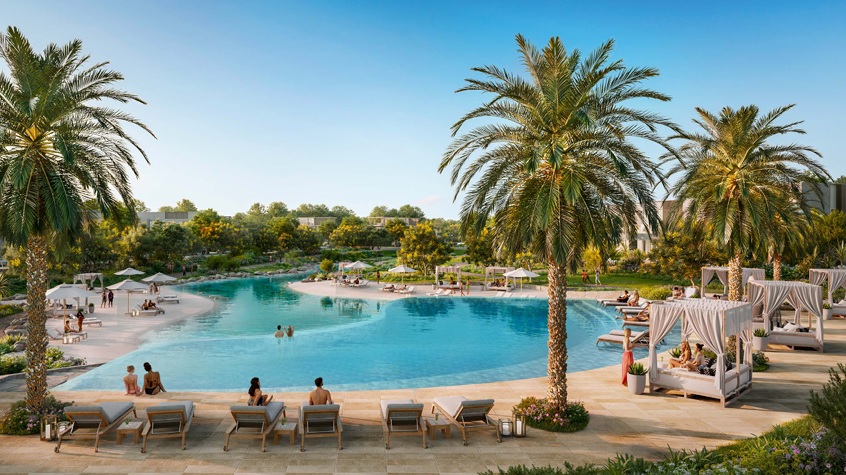
What Developers Mean for Buyers and Investors
For buyers, the developer affects much more than the name on the sales agreement.
It can determine:
What gets built. The developer decides the product, unit mix, amenities and positioning.
Where it gets built. Land selection determines access to employment centers, roads, transport and existing communities.
How it gets built. Construction management and contractor selection affect the eventual physical asset.
When it gets delivered. For off-plan buyers, delivery is a central part of the purchase decision.
What surrounds it. In master-planned developments, future phases can change the environment around an individual property.
How much choice buyers have. The continued launch of new developments creates competition between projects, which makes direct comparison increasingly important.
Final Takeaway
Property developers are not simply the companies behind Dubai’s property launches. They are one of the main forces determining the city’s future housing supply, community structure and development pipeline.
The scale is visible in the numbers. Dubai recorded more than AED 680 billion in real estate investments in 2025, while off-plan residential sales reached about 132,000 transactions, according to Betterhomes.
At the company level, Emaar reported AED 80.4 billion in 2025 property sales, Sobha Realty reported AED 30 billion (including its Umm Al Quwain projects), and Dubai Holding Real Estate reports more than 106,700 residential and land plots delivered across its portfolio.
But these figures should be used as context, not as a shortcut for choosing a property.
The more important exercise is to move from developer-level reputation to project-level evidence.
Check the developer’s completed projects. Verify the specific project with Dubai Land Department. Review construction progress, escrow information, payment obligations, service charges and surrounding development. Then compare the property against competing projects in the same location.
In a market with thousands of new units entering the pipeline, the developer’s name is only the starting point.
The real value lies in understanding what the developer is building, where it is being built, how it is being delivered and what the finished development will mean for the property you are buying.